When should I involve a family solicitor, and what should I bring?
Many parents speak to a family solicitor when they can't agree something important, when they want an agreement made formal, or when they're worried about safety. Bring a short, dated summary of what's happened and what you're hoping for, rather than everything. In England and Wales, mediation is usually tried first.

How Coparity helps
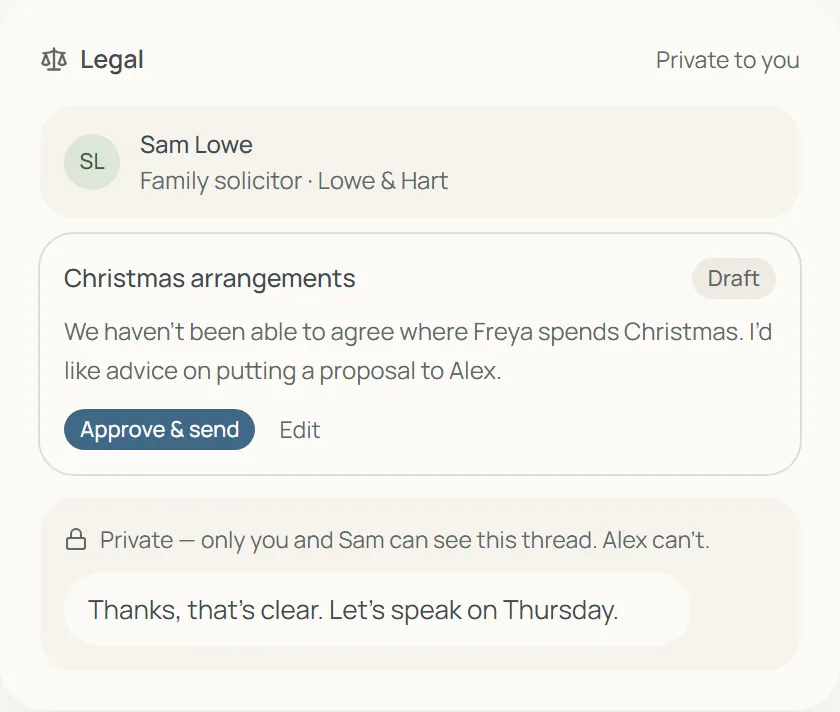
Your legal team, private to you
Keep your own solicitor's details, and search for local family-law firms when you need one.
A clear first enquiry
AI helps you draft a calm summary of the issue to send. You read and approve every word.
A private thread with your lawyer
Talk to your own representative in Coparity. Your co-parent never sees it.
A focused brief
The Case Builder helps you put together key dates, patterns and requests for one named representative, from records you already keep.
How it works
- Add your solicitor, or search for a local family-law firm.
- Draft an enquiry and send it when you're happy with it.
- Invite your solicitor to read your side of the record, if you choose.
Who sees what. Your legal lane is private to you: contacts, enquiries, cases and your chats with your lawyer are never shown to your co-parent or their representatives.
Questions parents ask
Do I need a solicitor to agree arrangements?
No. Many parents agree arrangements themselves or through mediation. A solicitor can help when you can't agree, want something formal, or are worried about safety.
What is a MIAM?
A Mediation Information and Assessment Meeting. In England and Wales you usually need to attend one before applying to court about child arrangements, unless an exemption applies, such as domestic abuse.
What can my solicitor see?
Only what you invite them to: a read-only view of your own side of the space. They never see your co-parent's private lanes.
Is the Case Builder a case against my co-parent?
No. It's a focused brief about your child's arrangements, for your own representative, built from facts you already hold.
General information for parents in England and Wales, not legal advice. For your own situation, talk to a family solicitor or a mediator.